Unlocking the power of pretend play: How CONNETIX can increase emotional and cognitive flexibility

Tags
Pretend play is complex, it begins when children have figured out how objects can be used and then impose meaning on them. Pretend play is an important part of childhood, shaping the way children think, communicate and interact with the world. When children engage in pretend play, they use their imagination to go beyond the literal and create stories, take on different roles and make sense of real-life experiences. The development of pretend play skills can support flexibility, both cognitive and emotional – which is an important skill for children to develop. It will support them to navigate different situations, adapt to changes and solve problems with more ease.
Enhancing flexibility for some kids can be tricky but pretend play can make it easier as it encourages children to think in new ways, adjust their ideas and explore multiple perspectives.
One of the best ways that children can engage and interact with elements of pretend in play is through the availability of open-ended toys like CONNETIX. These magnetic tiles provide endless possibilities for creative expression, allowing children to build, explore and role-play in ways that support their developmental growth.
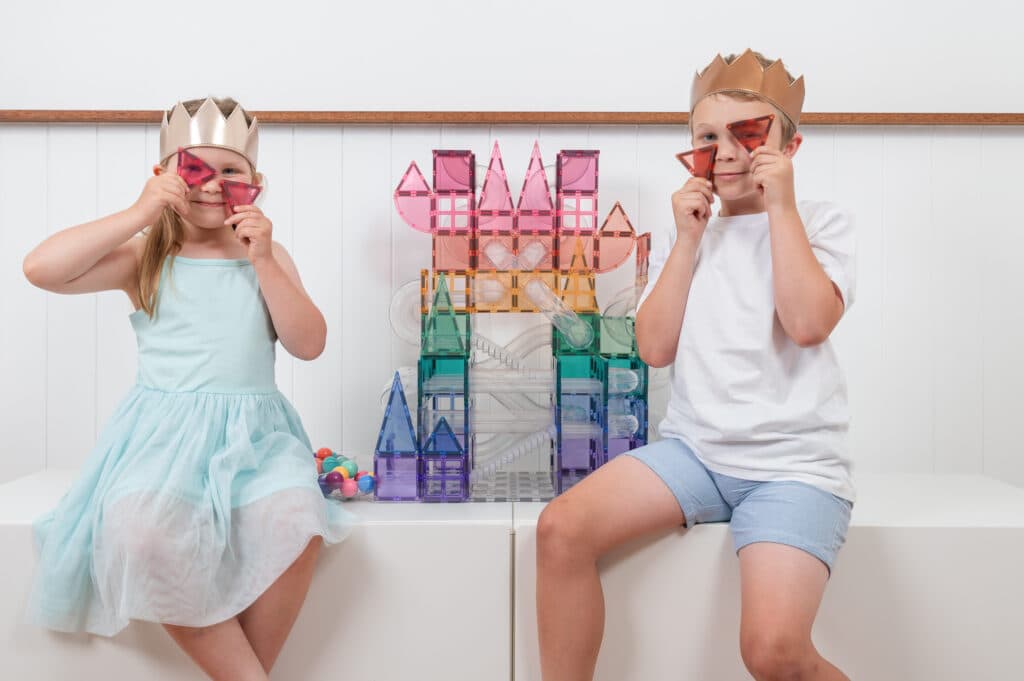
Research identifies several key pretend play skills that children develop as they engage in imaginative activities:
To encourage cognitive flexibility and object substitution, you could challenge children to build something and ask, “What else could this be?”, “How could we add more tiles and turn it into something else?”, “When I look, I can see a…”
With so many ways to play, build and imagine with, CONNETIX are the perfect toy to encourage pretend play. Simply watch as children learn about themselves and the world around them whilst immersed in the joy and magic of play!

Sarah Bolitho is a master’s qualified Child Play Therapist and Certified Practicing Counsellor who specialises in working with children under nine years old and their families. Sarah owns and practices in a private clinic in Perth, Western Australia offering children and families individual and family therapy to improve psychosocial and emotional wellness, strengthen relationships and heal from adversity. Sarah also has an online community at @securefoundations where she provides insights and awareness to boost parental confidence and knowledge. For the parents that want to go deeper into understanding themselves, their children and their relationships she hosts the parenting on purpose club, a membership for growth minded parents to find their inner wisdom.

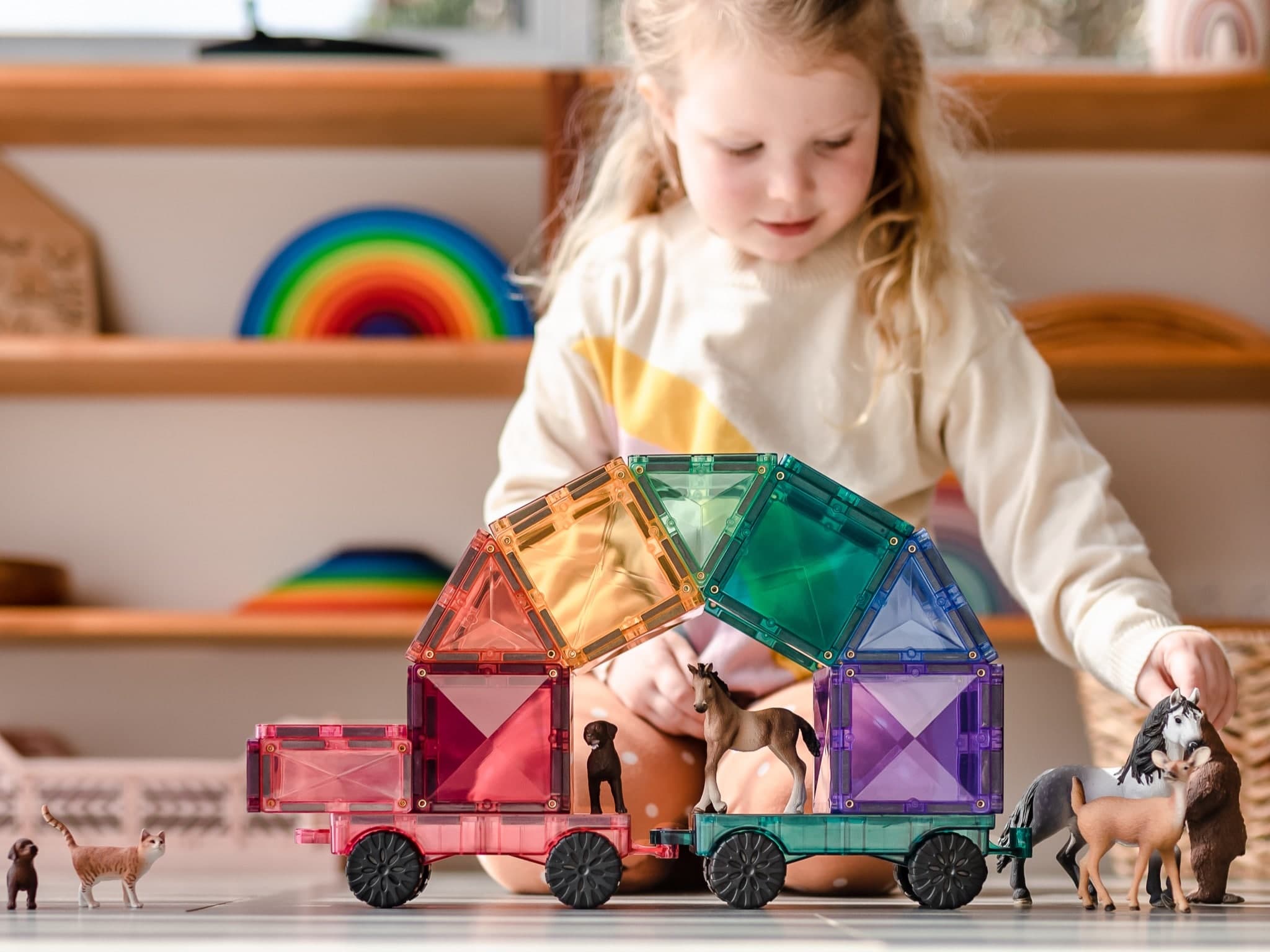
In pretend play, the rules and story line can constantly evolve which means children need to adjust their thinking. For example, if a CONNETIX bridge were to collapse, they would either need to rebuild it in another way or imagine a new way to cross the imaginary river or road. These small challenges in play train the brain to flex and adapt, showing them that it can be safe to change. It also provides the opportunity for children to come up against things that cannot be changed, for example, some structures aren’t stable and there’s nothing that can be done to change that. This provides the opportunity for children to tolerate frustration and experience futility.
When children take on different roles in play, and even change roles during play, it allows them to consider different perspectives, understand different thoughts/needs/wishes and become more adaptable in their thinking. Play enables children to do this in a way that can feel organic and happens quickly due to the influence of others in the play. This improves mental agility and supports children’s capacity to adapt to changes.
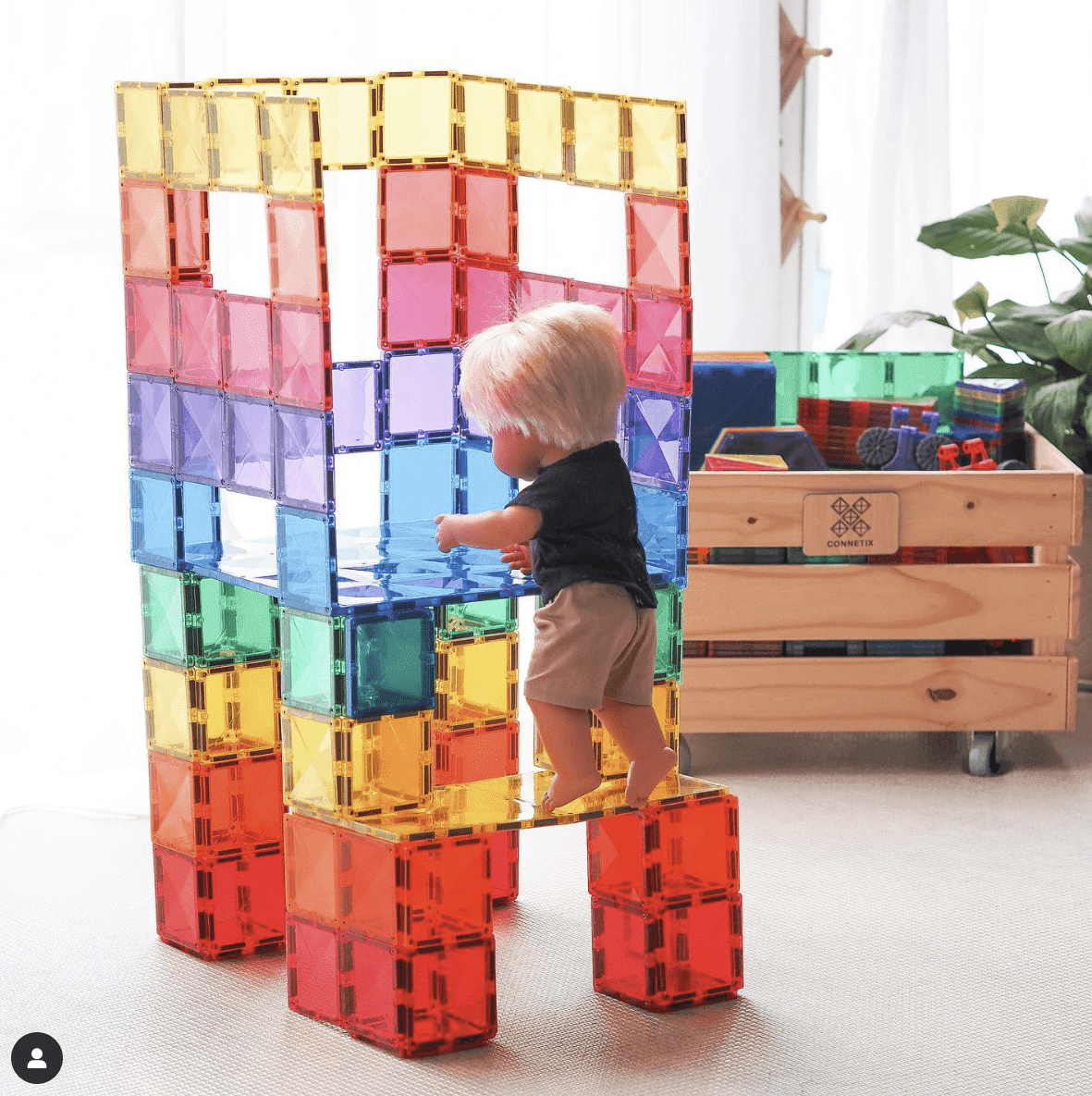
Doll/teddy play allows children to project their emotions onto a doll or teddy (e.g.,“Teddy is sad because he lost his toy”), they distance themselves from the emotion, making it easier to process and manage without feeling overwhelmed. These skills build emotional flexibility, resilience and communication, helping children navigate both real and imagined worlds.
A doll/teddy can also act as a nonjudgmental companion, giving children the confidence to try different emotional responses without fear of failure. They can experiment with various ways of handling frustration, sadness or excitement, strengthening their ability to adapt to different emotional states in real life. Dolls and teddies can be used as a ‘play-partner’ when using CONNETIX and could be used to experience turn taking as well as being used in imaginative play scenes.
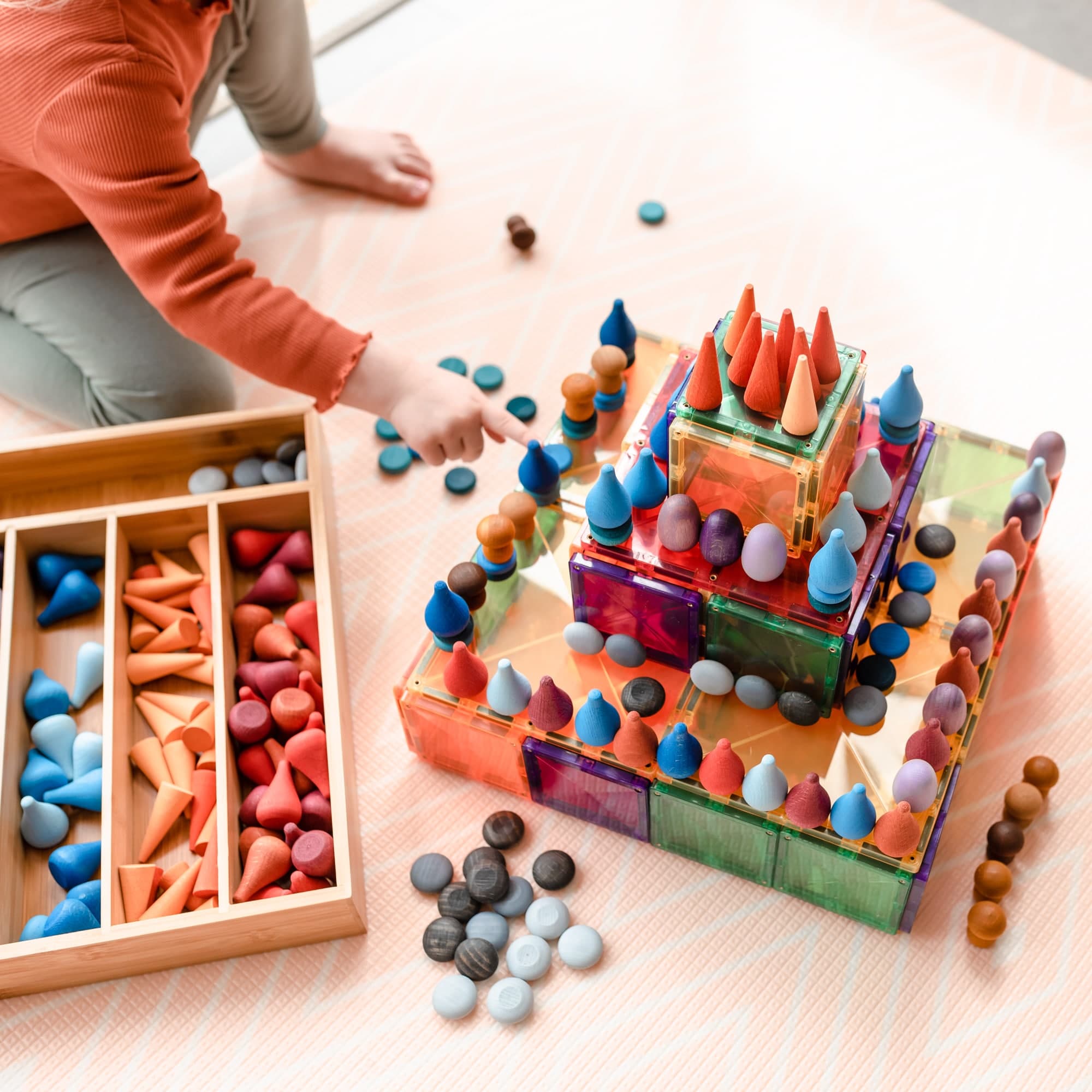
Pretend play isn’t just about having fun—it plays a crucial role in cognitive, social and emotional development. Studies show that children who engage in rich pretend play may demonstrate:
Engaging in pretend play is one of the ways children can develop life skills that will support their learning, relationships and emotional well-being.
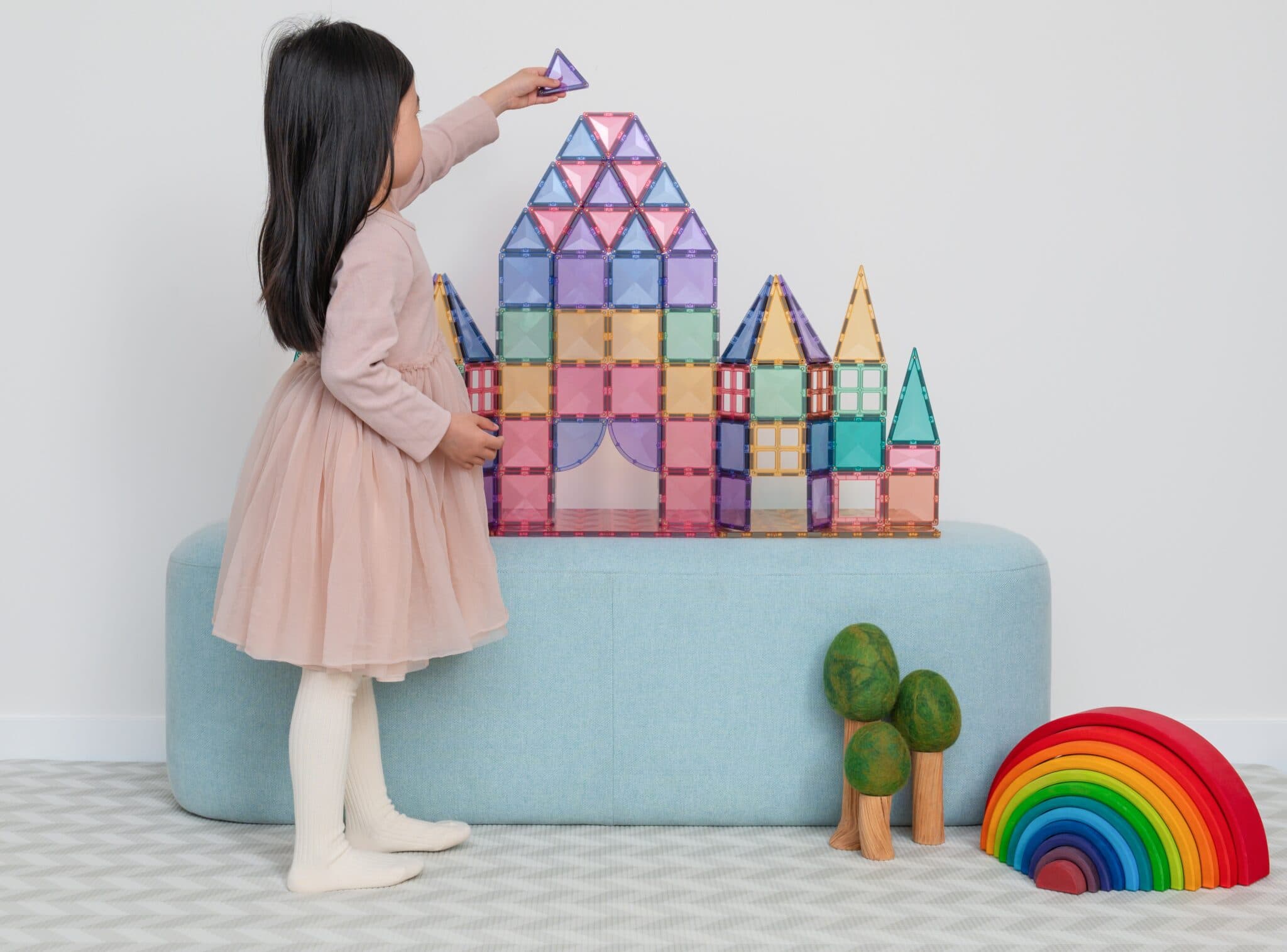
You can encourage rich and meaningful pretend play with CONNETIX by:
One of the challenges children may see a play therapist for is to encourage flexibility in their thinking. A lack of flexibility in thinking can be a challenge for some children not only in social situations but also in family life where multiple people may need to be considered or when plans change for example. One further way that you could use pretend play to encourage flexibility is to present problems in the play.
For example, your child may be driving a truck to the farm and you could say “uh-oh. It’s run out of fuel, we’ll need to get some more.” Another example would be “Oh no, this peg person just told me they don’t like blue tiles on the top, we’ll have to change it.”
Menu
 Australia