Learn how CONNETIX can help your child explore foundational coding skills through play.
Imagine a world where the literacy rate is only three per cent. It sounds kind of strange, right? What if, out of every hundred people, only three could read or write? Right now, in Australia, there are over 25 million people, yet fewer than 750,000 can read and write code—the language of technology. While many jobs in the near future may be replaced by automation, one very important skill will not be replaced by computers, and that’s coding.
Kids who learn coding skills at an early age will have a greater advantage in our rapidly advancing digital world. However, coding is much more than a language. It’s the art of problem-solving. It’s a blank canvas for creativity.
While most people would believe that you need a computer to learn to code, that’s simply not true. Many of the foundational coding skills can be taught with pencil and paper, in your head, and with CONNETIX.
What is Coding?
We use computers to play games, send important emails, and talk to friends. However, none of these activities would be possible without computer programs.
But how are computer programs made? Computer programs are made from a special language called code. Computers cannot think for themselves. Therefore, it needs computer programs to know what to do. Code uses words and numbers. Sometimes, code use words you already know. Code is nothing more than a fancy set of directions to tell a computer how to complete a task.
Here’s a way to think about it.
Have you ever needed to find something at a store or at home and needed directions to find the item? For instance, your brother may have used the gaming controller and left it somewhere. They may give a direction like, it’s upstairs, in my room, by the foot of my bed. This person has basically written a computer program – a series of steps to help complete a task.
The code was the individual steps to get to the item. Get it?
The harder the task, the more steps you may need to solve a problem.
Coding In the Early Years
For kids, coding should focus on S.T.E.A.M. (short for science, technology, engineering, art, and math) activities. Creating S.T.E.A.M. projects help young children develop problem-solving strategies and strategic and critical thinking skills. These skills are foundational in coding.
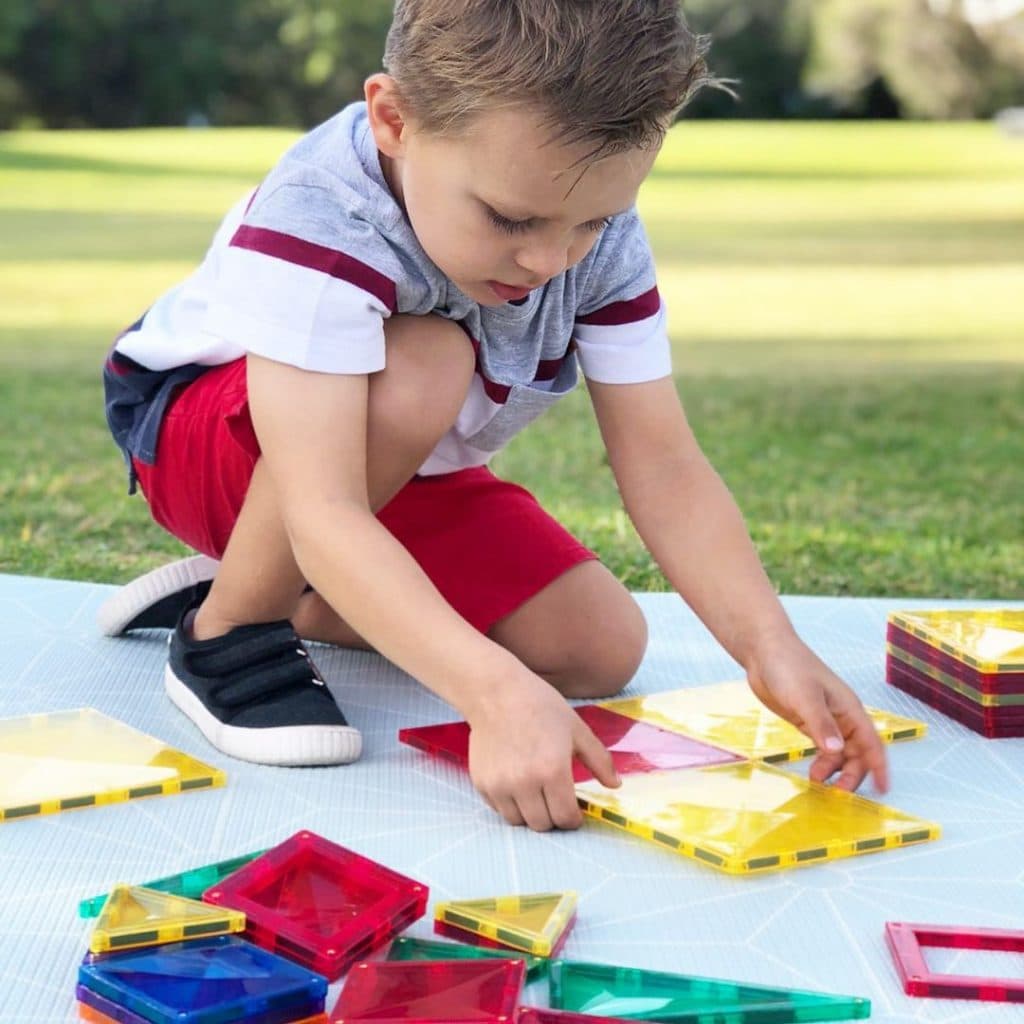
Children can learn to think creatively to solve a problem. Parents can encourage this by setting parameters on a building task. For instance, making a bridge using only triangle tiles or constructing a building that can support two matchbox cars on top. Building in difficulty as you go along will help your child think flexibly and use their critical thinking skills to create new and exciting structures.
Next, have your child explain the process they used to design their structures. What came first? Did you encounter any problems? What were the steps to building their creation?
By having your child explain their thinking process, you’re building their metacognition, thinking about thinking. It is a valuable skill in thinking through a process, which is foundational to coding. Using coding terminology while building is a great way to get them thinking about coding before using computers. Three excellent coding words to teach are procedures, loops, and conditional instructions.
Here are three ways you can use CONNETIX to support coding literacy through play.
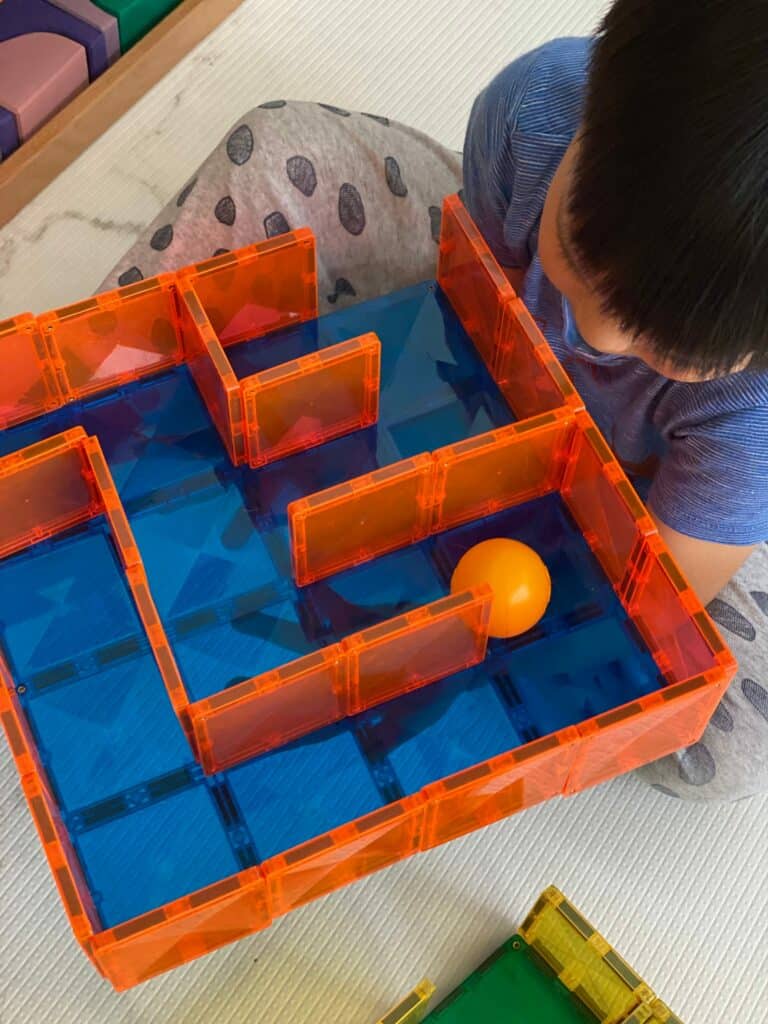
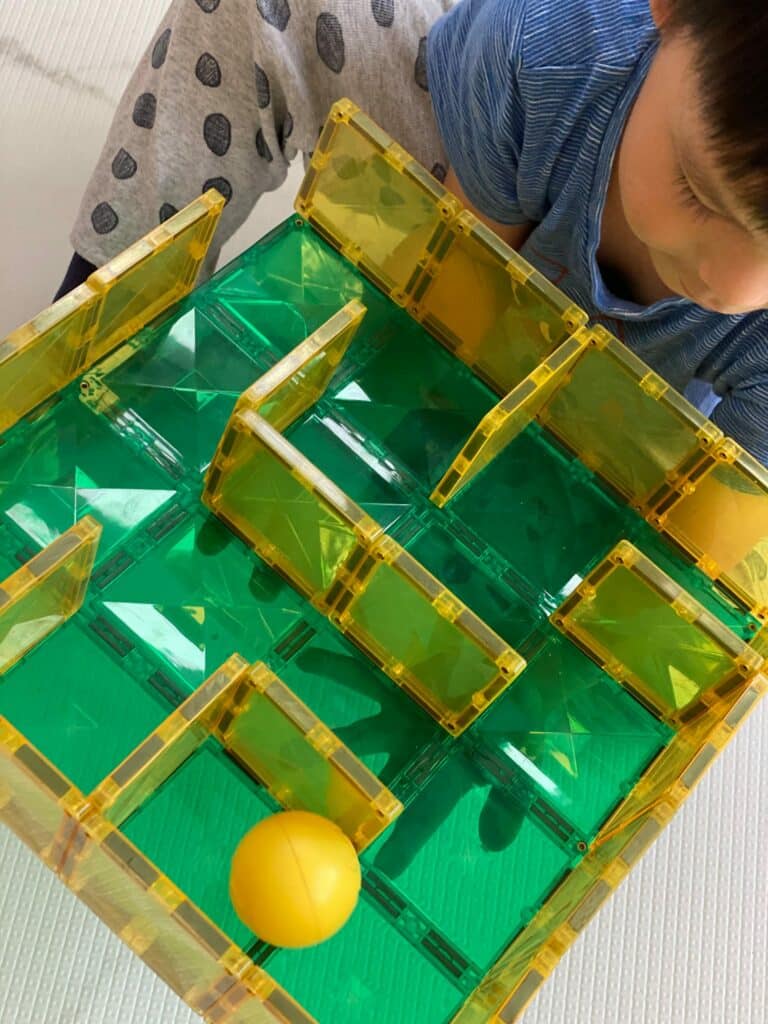
1. Maze Runner
2. The Floor Is Lava
@connetix_tiles
Exploring Force and Motion with CONNETIX
@connetix_tiles (via @themother_witch)