1. Encouraging Kids to Ask for What They Need
2. Teaching Kids to Speak Up in Group Play
3. Practicing Problem-Solving and Asking for Help
4. Helping Kids Set Boundaries and Say No
5. Using Play to Normalise Emotional Expression
6. Suitable for a Wide Age Range
7. Easy to Clean and Store
8. A Sustainable Choice
9. Award-Winning and Trusted by Educators
10. Not Just for Kids
Tags
If you’ve been following along, you already know that CONNETIX magnetic tiles are the unsung heroes of childhood development. We’ve explored how they can help kids build self-regulation (because meltdowns over wobbly towers are basically a childhood rite of passage). But today, we’re shifting gears to talk about something equally vital: self-advocacy.
Self-advocacy is the ability to recognise and communicate one’s own needs, feelings and rights in a way that is confident yet respectful. It’s the skill that helps kids say, “I need a turn with the red tiles,” instead of yanking them from their sibling’s hands like a teeny tiny dictator. It’s what allows them to seek help when they’re stuck, rather than collapsing in frustration. And most importantly, it’s the foundation for strong mental, emotional and social health (MESH).
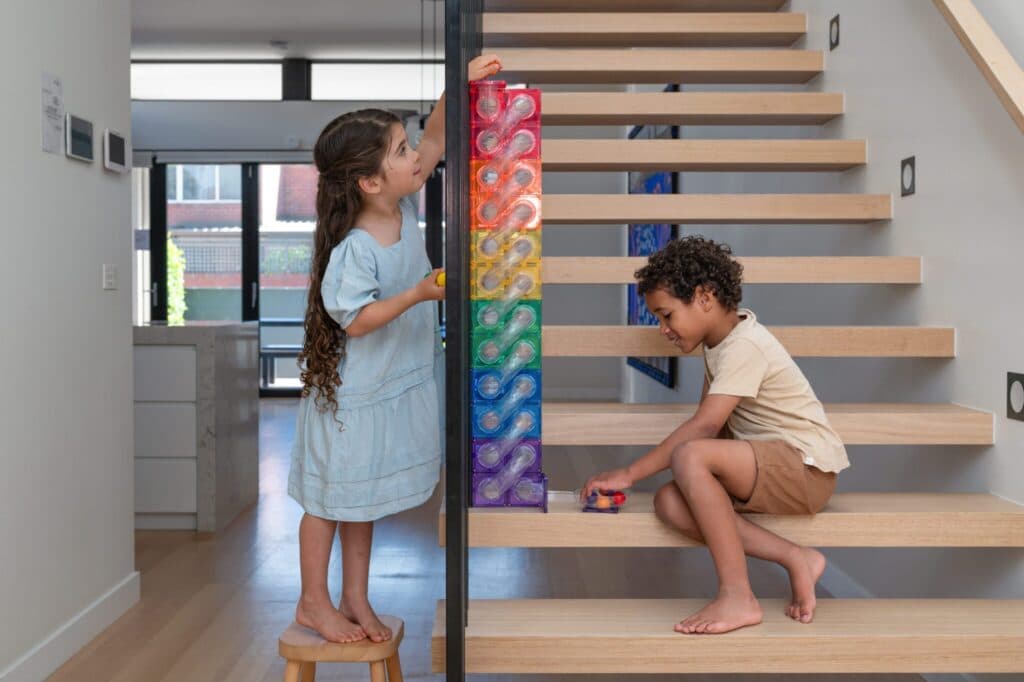
The good news? You don’t need a structured lesson plan or a complicated strategy to teach self-advocacy. You just need a pack of CONNETIX tiles, a bit of playful curiosity and a willingness to let your child take the lead.
Self-advocacy is essentially speaking up for yourself in a way that is both effective and respectful. It’s about:
Self-advocacy isn’t just a “nice-to-have” skill; it’s essential. Children who can advocate for themselves are better able to navigate friendships, manage conflicts, and engage with learning environments confidently. And let’s be real…no parent wants to be the lifelong middleman between their child and the world (“Mum, tell them I want a turn” at age 3 is one thing, but at 23? Less ideal).
So, how do we teach it? Through play.

Self-advocacy starts with naming and expressing needs; a skill that many young children struggle with (because snatching is faster, obviously).
Play Idea: “The Missing Piece”
This simple exercise reinforces that their voice matters, and it gives them practice in identifying and expressing their needs—without resorting to dramatic sighs or silent frustration.

If you’ve ever watched a group of kids play, you know it’s not always peaceful negotiations and democratic decision-making (it’s more like Lord of the Flies with a better snack selection). Teaching kids to use their words to advocate for themselves helps prevent conflicts and build social confidence.
Play Idea: “Build Together, Speak Together”
This helps kids learn that they have a right to be heard, and they can do so in a way that strengthens relationships rather than causing friction.

Self-advocacy also means recognising when you need support and knowing how to ask for it, an essential skill in school, friendships and life.
Play Idea: “The Stuck Builder”
This teaches children that seeking support is a strength, not a weakness. (It also subtly reduces the likelihood of a dramatic floor-flopping meltdown.)
Part of self-advocacy is knowing when to say no and stand firm—a skill that will serve them well in everything from playground disputes to future peer pressure scenarios.
Play Idea: “The Tile Protector”
This helps kids practice assertiveness in a low-stakes, playful setting—so they feel more comfortable doing it in real-life situations.
Self-advocacy isn’t just about words; it’s also about recognising and validating emotions.
Play Idea: “Feelings Towers”
This provides a visual, interactive way to talk about emotions, giving kids the language they need to express themselves effectively.

Self-advocacy is one of the most empowering skills a child can develop. It gives them the ability to express their needs, set boundaries, ask for help and navigate social situations with confidence.
And the best part? It doesn’t require long lectures or forced lessons, just a few CONNETIX tiles and some playful, intentional guidance.
So, next time your child is about to swipe a tile from their sibling’s hand, pause. Instead of intervening, coach them through the process of using their words, setting boundaries and advocating for themselves. Because every “Can I have that, please?” and every “I need help with this” is a step toward raising a child who knows their own voice matters.
And if all else fails…just make them negotiate for the last blue tile. Nothing builds self-advocacy quite like the high-stakes politics of magnetic play.
CONNETIX is designed to adapt to a child’s stage of development, making it a toy that truly grows with them. For preschoolers, the bright colours and simple shapes introduce early concepts like colour recognition, shape sorting, and basic stacking. As they gain confidence, they begin experimenting with simple builds, improving hand-eye coordination and fine motor skills.
For early primary-aged children, CONNETIX becomes a tool for imaginative play and storytelling. They might build houses for toy animals, garages for cars, or castles for their favourite characters, all while developing problem-solving skills and spatial awareness.
Older children take things to the next level, using the tiles to engineer complex structures such as bridges, towers, ball runs, and geometric patterns. They begin to explore concepts like symmetry, stability, and design planning, often incorporating STEAM principles without even realising it!
Because CONNETIX is so versatile, they can engage siblings of different ages at the same time, as well as bring together parents, grandparents, or even neighbours. A three-year-old might be stacking squares while an older sibling builds a multi-level ball run right beside them, creating opportunities for shared play, cooperation, and learning together. This makes CONNETIX a toy that works for the whole family, year after year (hello Friday night boardgame night!)

CONNETIX are designed with busy families in mind. The smooth tile surface means that a quick wipe with a damp cloth is all it takes to remove fingerprints, crumbs, or sticky residue from little hands. There are no tricky grooves or small parts to trap dirt, making them one of the most low-maintenance toys you can own.
When playtime is over, the tiles stack together neatly which makes tidying up fast and satisfying for both kids and adults. Because they pack down compactly, they are also easy to take along to grandparents’ houses, playdates, or even on holiday, ensuring creative play is always within reach without creating clutter at home.
CONNETIX tiles are built to last, making them a thoughtful choice for families who value sustainability. Their high-quality, non-toxic materials and strong construction mean they can withstand years of active play without losing their vibrant colours or magnetic strength. Unlike many toys that break, wear out, or lose their appeal after a short time, CONNETIX remains engaging across different ages and stages, ensuring they stay in use rather than ending up in landfill.
As they are timeless in design, they can be passed down to younger siblings, cousins, friends, or even donated to schools and community centres. This not only reduces waste but also extends the joy and learning benefits to more children. By investing in a toy that grows with the child and retains its quality, you are making a purchase that is both environmentally responsible and economically smart.

CONNETIX has earned recognition from respected toy and education awards, giving parents and gift buyers confidence in its quality and value. Many early learning centres and classrooms use the tiles to teach concepts like geometry, symmetry, and problem-solving, while encouraging teamwork and communication. This professional trust means you are giving a gift that is both fun and proven to support learning and development.
There’s something about the stunning colours (hello pastels) and beautiful light refractions that creates a delightful sensory experience and aesthetic appeal for parents too! Not only do CONNETIX feel great in the home, but they also unleash our inner-child and curiosity to create, imagine and explore – something that is so often overlooked as adults. CONNETIX provide an opportunity for parents to unwind, engage in selfcare and simply, to have FUN. So, whether you’re building epic creations together with your child or playing solo after the kids go to bed, CONNETIX really is a grown-up approved toy!
Now you know why CONNETIX truly deserves a place under the tree or at the next party. More than just toys, these tiles are tools for growth, connection, and fun. Whether you are gifting a first set or adding to an existing collection, you are giving more than a present; you are giving the gift of imagination, learning, and play that will be enjoyed for years to come.
Whether you are buying for a beginner or a seasoned builder, there is a CONNETIX pack for every age and interest. Check out the Gift Guide to find your perfect Pack!
Happy Playing!

Emily Hanlon, otherwise known as The Playful Psychologist, is a Clinical Psychologist from Sydney. She is also the proud mum of 4- and 1-year old boys, and is expecting her third baby this year. Emily has a specific interest in autism spectrum disorder and developmental delay. She has experience providing individual and group therapy for children, adolescents, and adults with a variety of presentations including ASD, Attention Deficit Hyperactivity Disorder (ADHD), mood-related disorders, anxiety, poor social skills, and other behavioural concerns. Emily draws on her own personal experiences of having a brother on the Autism Spectrum, and uses her unique first-hand experience, to facilitate her own therapeutic practice. Emily started The Playful Psychologist to share her love of creativity within her work. She enjoys sharing her ideas, and also loves learning from others! As a psychology student, and a young psychologist, she always wished she had somewhere to turn for inspiration - and that is what she hopes to do for educators, parents, and psychologists alike! Emily is extremely proud of the online community she has created to support the social and emotional development of children by upskilling the adults who support them.