Menu
Shipping to Australia
Australia
Menu
Australia
When disagreements arise (and they will), guide your child to express their feelings and needs using “I” statements. This helps prevent blaming language and encourages open communication.
Introduce a “Challenge Card” system. Write simple challenges like “Build a tower with only three colours” or “Work together to make a circle.” These tasks naturally encourage cooperation and problem-solving.
Sometimes, frustration takes over, and that’s okay. Instead of rushing to fix the situation, acknowledge your child’s emotions and help them move forward. This process is known as emotion coaching and involves guiding children through understanding and managing their feelings.
When emotions run high, call for a “Pause and Plan” break. Step back together, take three deep breaths and decide on the next steps. This reinforces emotional regulation while keeping the play going.
At the end of the session, reflect on the experience: “What was the best part of building together?” or “How did you solve the tricky part when we needed more tiles?” This helps children connect their actions to positive outcomes.
Tags
By now, you may have read three blogs that explore MESH learning. You may also have come to realise that CONNETIX are more than just an aesthetically pleasing toy, they’re an incredibly versatile tool for fostering MESH values such as perseverance and adaptive skills in children.
If you missed the last three blogs, I recommend a quick read (after this, of course) to remind yourself of all the incredible ways that CONNETIX can support your child’s social and emotional growth.
Today, we’re tackling a life skill as essential as coffee for parents and as unavoidable as snack-time negotiations: conflict resolution (because let’s face it, if you’ve got young kids, you’ve got drama).
Conflict resolution isn’t just about ending disagreements. It’s about fostering mental flexibility, emotional regulation and social harmony; all of which are essential components of your child’s MESH (Mental, Emotional and Social Health) development. And yes, you guessed it, CONNETIX can help you get there, one magnetic masterpiece at a time.
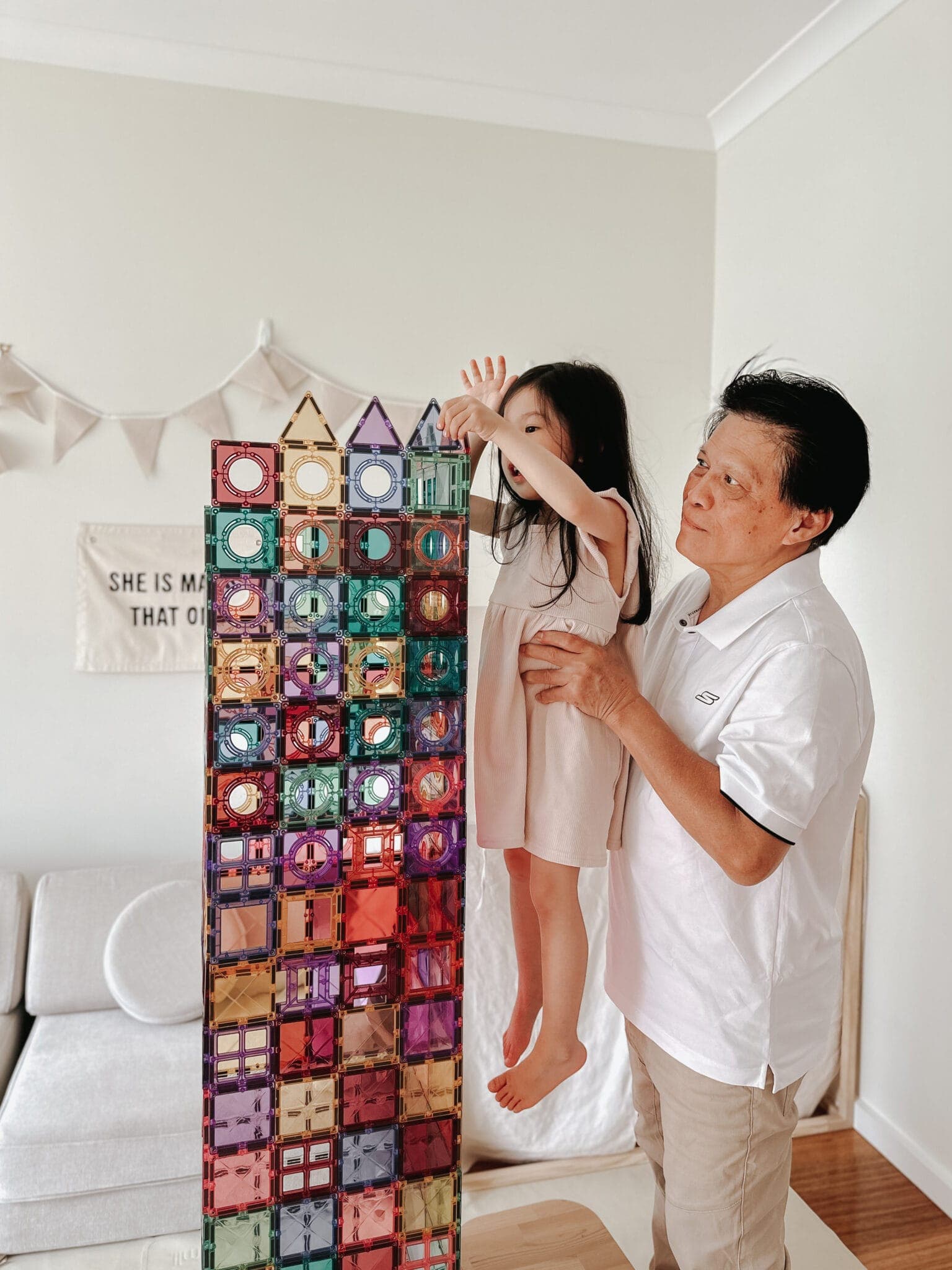
Conflict is a natural part of life, whether it’s a tussle over the last cookie or a disagreement about which colour tile should be used for the castle’s roof. Teaching children how to handle these moments equips them with:
In short, conflict resolution is a superpower that transforms arguments into opportunities for connection and growth. Let’s look at how you can use play, specifically to help your child develop this crucial skill.
Before diving into play, set a collaborative tone. Explain that you’ll all be working as a team, and lay out some ground rules like taking turns and listening to each other’s ideas. Keep it simple and positive:
“Today, we’re going to build something amazing together. Everyone’s ideas are important, and we’ll take turns sharing them.”
Build a “village” together. Assign each child a role, such as building houses, creating roads or decorating a park. Encourage collaboration by asking questions like:
“How can we connect your house to their road?”
“What should we add to make the park fun for everyone?”
Model these statements yourself during play:
“I feel frustrated when the pieces don’t stick, but I think we can solve it together.”

Conflict is an opportunity to flex those problem-solving muscles. Instead of jumping in to mediate every squabble, encourage your child(ren) to brainstorm solutions.
Try saying:
“Hmm, it seems like we both want the same tile. What can we do to make it fair?”
“What’s a way we can share these pieces so we both get to build what we want?”
“Let’s come up with three ideas and pick the one we like best.”
Or my personal favourite, and perhaps the simplest: “how can we fix this?”

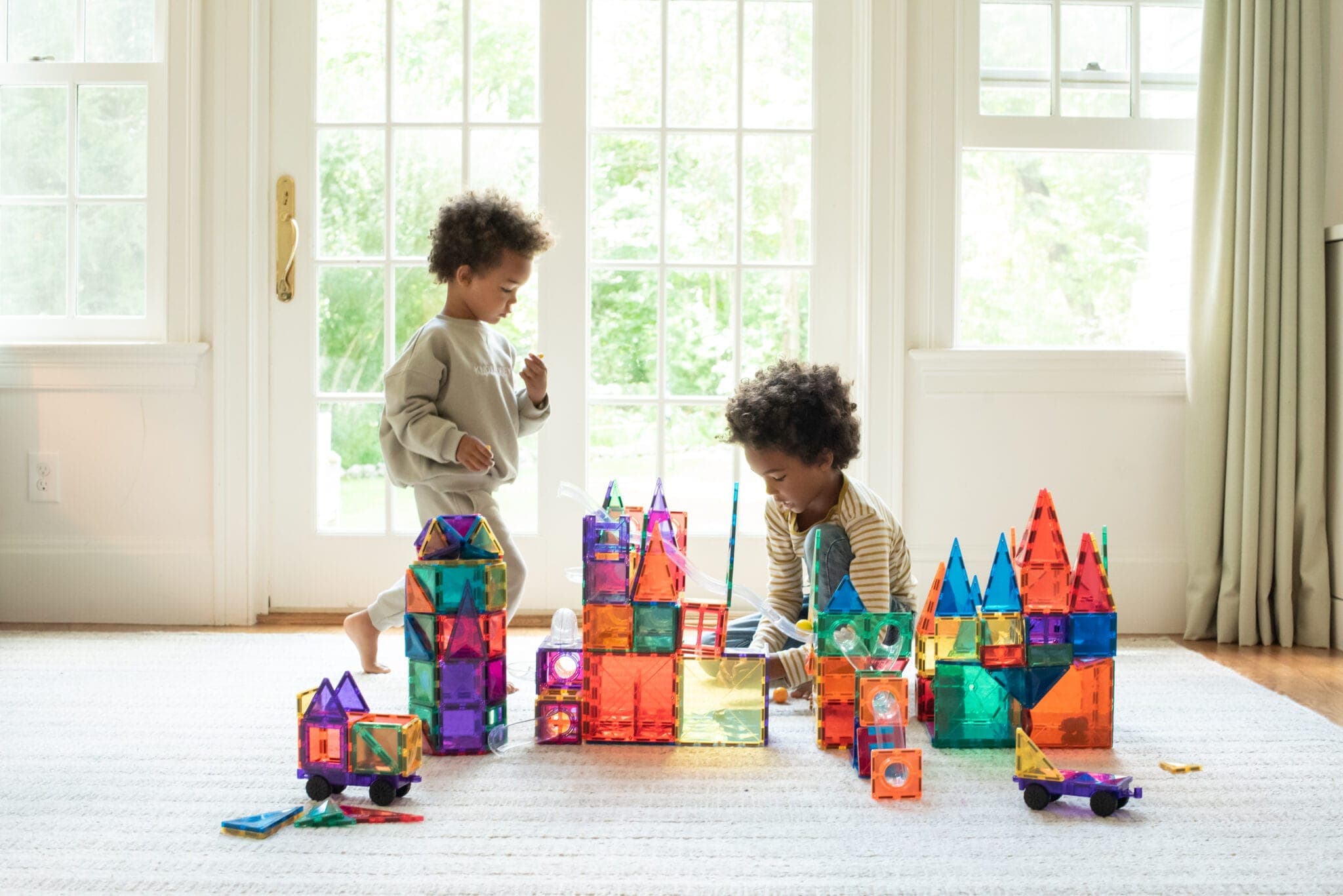
And remember, above all, try to model calmness. Your tone and body language matter. Stay calm and patient, showing your child how to manage emotions constructively.
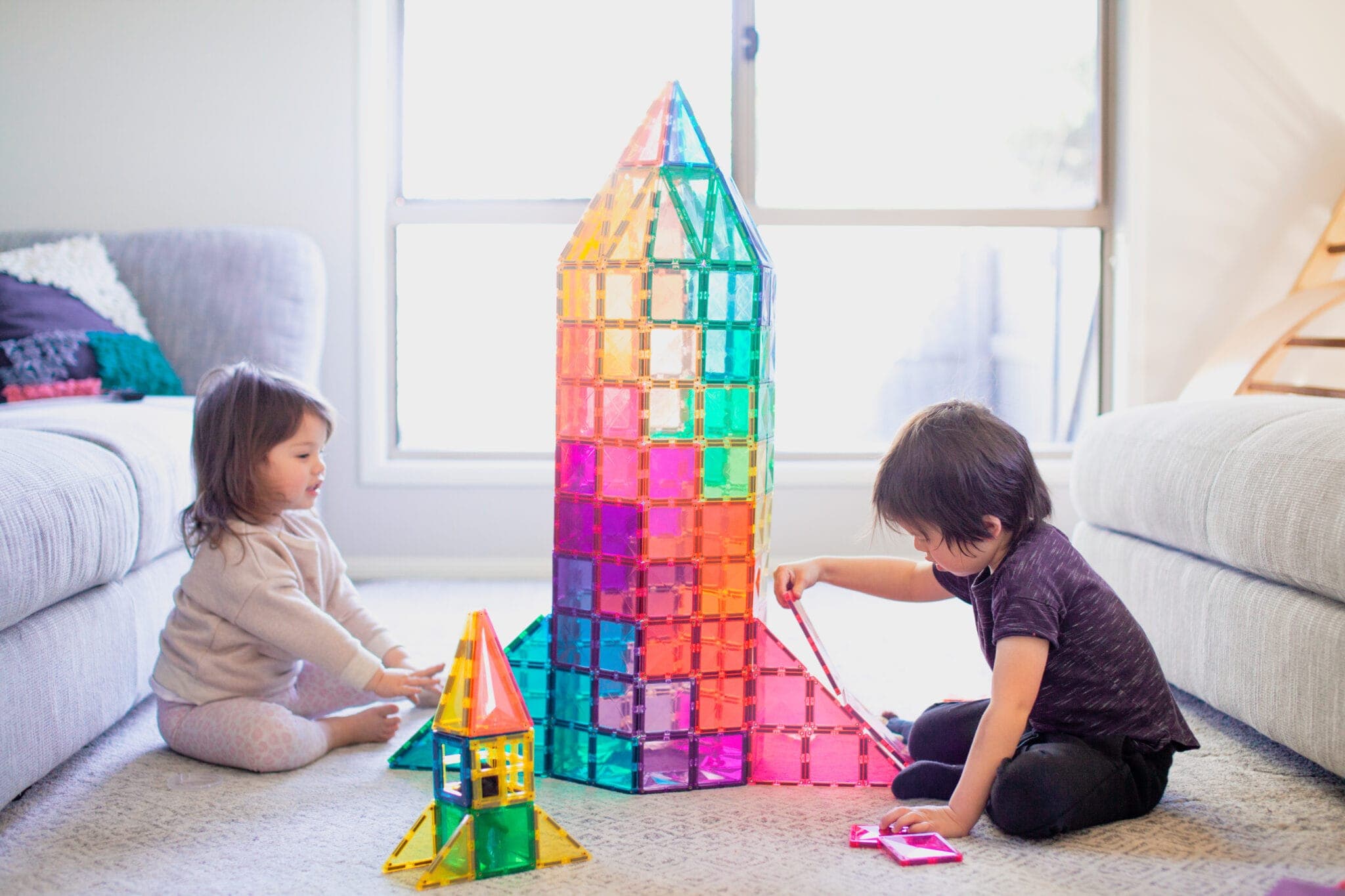
Role-play common conflicts during playtime to give your child a safe space to practice resolution skills.
For example:
Scenario: “Oh no, the mayor of the village (that’s you) says we don’t have enough tiles for the new school. What can we do?”
Encourage brainstorming and guide them toward solutions, such as sharing tiles or redesigning the school.

Emily Hanlon, otherwise known as The Playful Psychologist, is a Clinical Psychologist from Sydney. She is also the proud mum of 4- and 1-year old boys, and is expecting her third baby this year. Emily has a specific interest in autism spectrum disorder and developmental delay. She has experience providing individual and group therapy for children, adolescents, and adults with a variety of presentations including ASD, Attention Deficit Hyperactivity Disorder (ADHD), mood-related disorders, anxiety, poor social skills, and other behavioural concerns. Emily draws on her own personal experiences of having a brother on the Autism Spectrum, and uses her unique first-hand experience, to facilitate her own therapeutic practice. Emily started The Playful Psychologist to share her love of creativity within her work. She enjoys sharing her ideas, and also loves learning from others! As a psychology student, and a young psychologist, she always wished she had somewhere to turn for inspiration - and that is what she hopes to do for educators, parents, and psychologists alike! Emily is extremely proud of the online community she has created to support the social and emotional development of children by upskilling the adults who support them.