Menu
Shipping to Australia
Australia
Menu
Australia
Tags
It is both developmentally appropriate and necessary for children of young ages to learn through play and hands-on experiences with the freedom to explore interests and express creativity.
Photocredit: ourmanycoloureddays
In fact, it is most often better! I’ll share why and exactly how you can merge the two with step-by-step activities for you to try with your little ones.
How often do you doubt you are doing enough to support your children’s development or worry they should be doing more sit-down instruction? I sometimes do, but then I remember what I am about to share with you here. Whether you are setting up a good educational foundation before your children attend school, are supplementing schoolwork or are homeschooling, I hope this blog brings you comfort, confidence and support.
Although I went to college to be a teacher, I am currently at home with my two littles, ages five and two, navigating our first year of homeschool. If I had to sum up what I learned while earning my teaching degree which focused on human development from ages birth through to kindergarten, it would be with this statement:
Our little ones aren’t exactly built to sit for extended periods of time or have very long attention spans, so with that can come things not conducive to learning such as disinterest, distraction and lack of effort.
How can we address or prevent this?
When children are playing and doing something they are interested in they are actively engaging several senses. When we pair multisensory experiences with learning opportunities this is called multisensory learning. Possibly the largest benefit of this type of learning is improved memory; helping commit new information to long-term memory and recall. While there are many benefits to this type of learning, I will focus on three that tie in largely with education and overall development.

How effective is an activity if our children aren’t participating or putting in effort? When we can get their ears listening, bodies moving and hands working, we are more likely to have their attention and participation.
Pairing a skill with play that may not be otherwise appealing, like practicing reading for my five-year-old, can help us achieve the level of engagement that might otherwise be a struggle to obtain.
When we were working on letter sounds and tried to blend them for the first time, this is the exact technique I used – and it worked! Reading consonant-vowel-consonant words (or CVC words) such as cat, rat and bat are a natural next step after working on letter sounds.
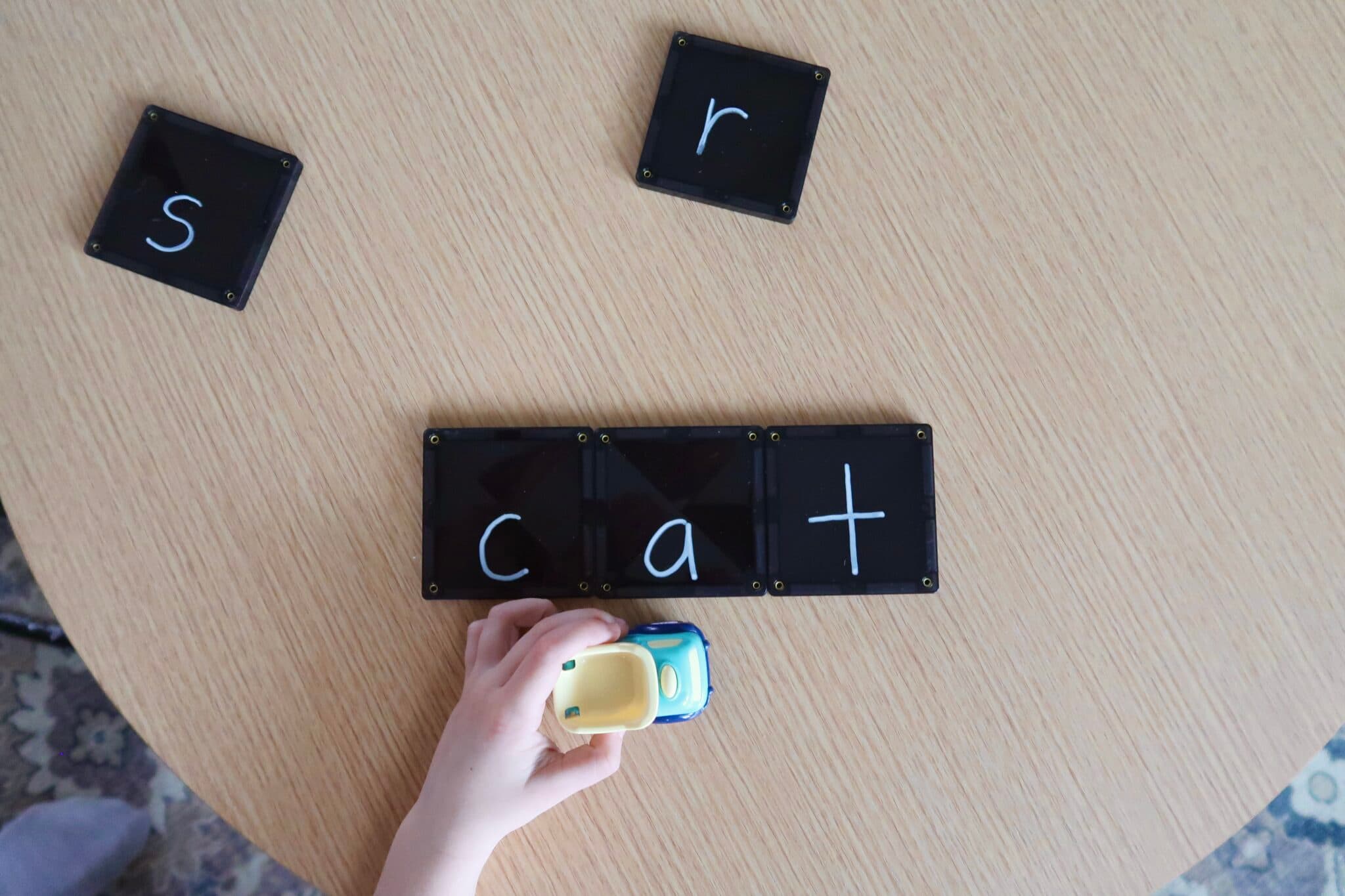
Material:
Set up:
Games are naturally fun and engaging, but also serve as a great medium for learning. No matter a game’s objective, there is always a certain level of attention and comprehension needed to participate.
BINGO is a classic game of letter and number recognition that can easily be tweaked and recreated at home to work on specific skills that make sense for your children.
While numbers and letters like in traditional BINGO work well, one example of adapting this game would be to use words. In order to practice reading, we have replaced numbers and letters with CVC words.
Pretend play is a popular choice with young children whether it be at home or school. To name a few benefits, it allows children to be creative, work through things on their minds, and explore different roles and emotions. Joining in or initiating it creates an opportunity to introduce new words and model appropriate interactions such as turn-taking when speaking.
One of the best things about pretend play is little or even no props are needed! Let’s look at different learning opportunities that could unfold with a pretend ice cream shop.
Starting off with a, “Hi, may I have two scoops of chocolate ice cream in a cone, please.” This one sentence includes a polite greeting, a quantity, scoop as a vocal word, a specific flavor, cone as a vocal word, then ending with a polite “please”. A sentence that typically wouldn’t stick out as abnormal to a child while playing ice cream shop can be packed with lots of skills.
I hope these activities give you some insight on the benefits of play, the great medium for learning it is, and the confidence to embed more learning opportunities into play.

Christina Dartt graduated college ready to teach, but instead of doing so in a classroom she is using her knowledge to teach her own little ones at home. She opted to reach more lives by sharing ideas on Instagram on learning through play and living life with other parents and educators. She believes in simple activities and incorporating skills into play, engaging games, and hands on experiences.

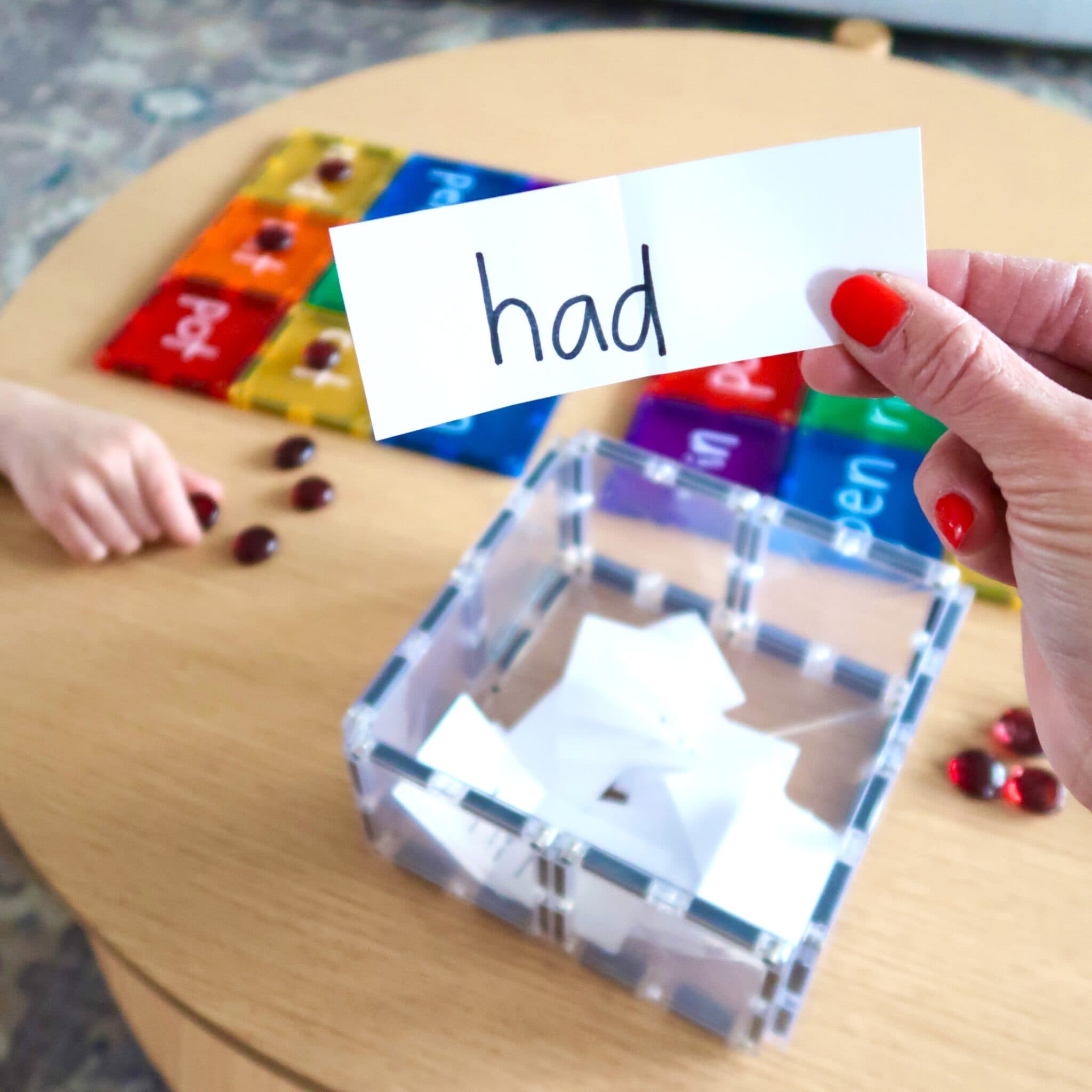

Material:
Set up:
